
Evidence and provenance
Connect source reports, sample roles and reviewed observations.
DNA INTERPRETATION · SCIENTIFIC CLARITY
Parentage. Kinship. Mixtures. Missing-person research.
Probabilix brings genetic evidence and structured review into one connected environment, helping scientists examine complex findings and explain the assumptions behind them.
Built for laboratories, researchers and scientific collaborators.
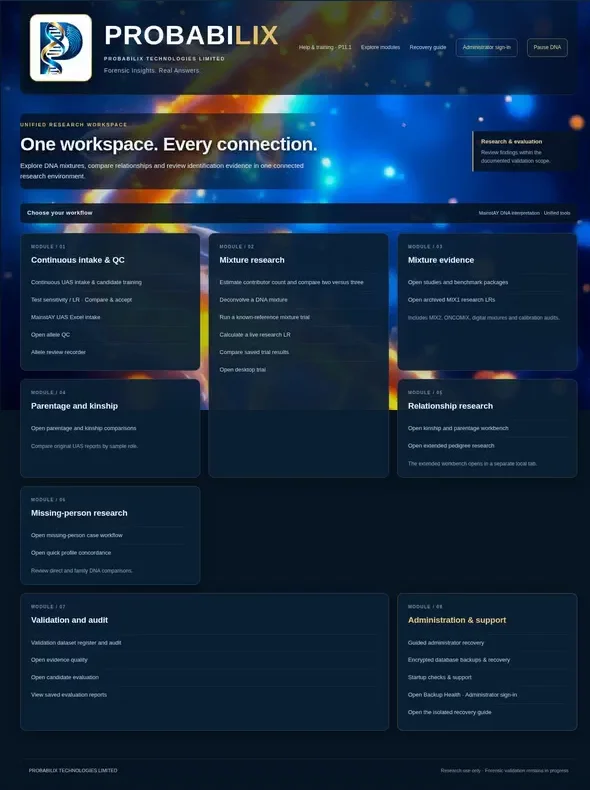
FOUR QUESTIONS. ONE CONNECTED PLATFORM.
Explore each workflow through its inputs, review process, research output and a practical teaching example.
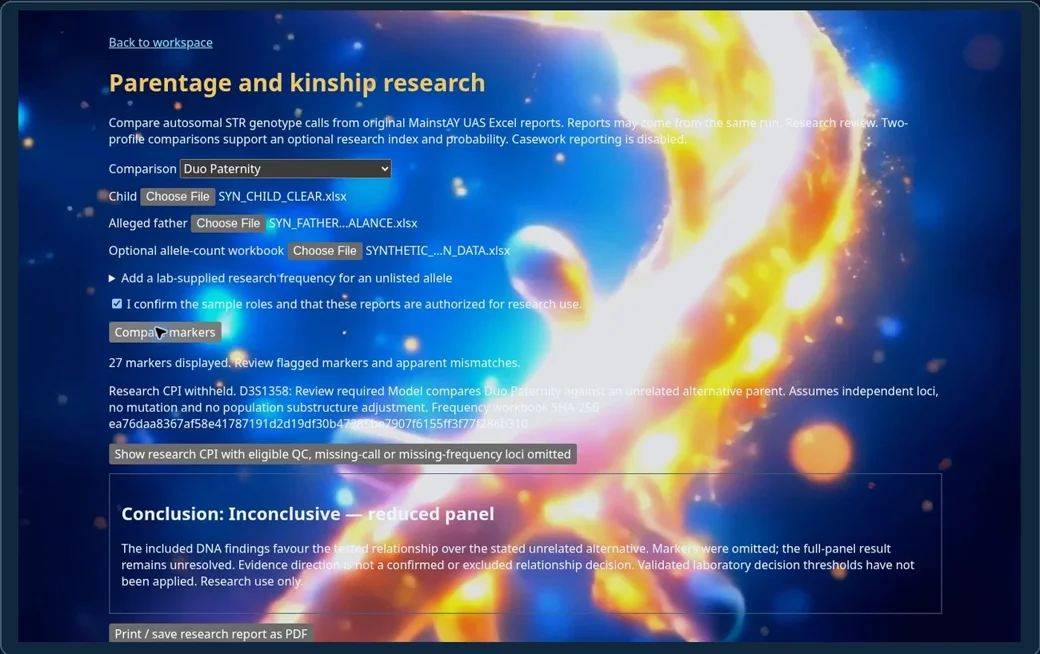 WORKFLOW 01
Compare child and parent profiles, examine each STR marker and review the evidence behind a research relationship index.
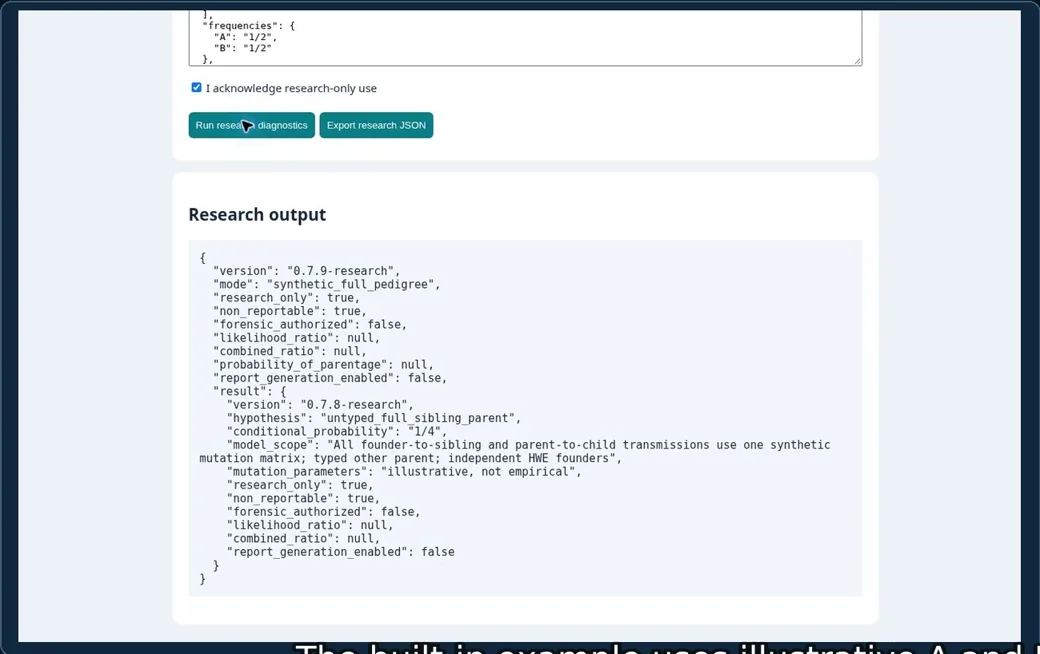 WORKFLOW 02
Explore sibling, avuncular and grandparent relationships using stated hypotheses, appropriate population data and a traceable review.
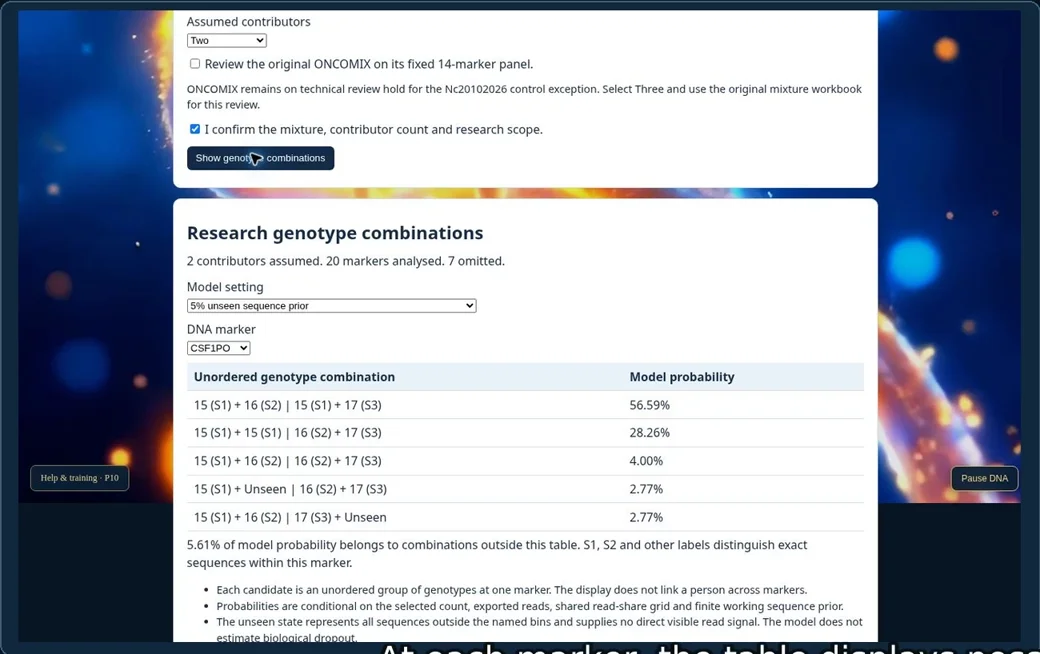 WORKFLOW 03
Move from contributor screening to possible genotype groups, known-reference trials and exploratory likelihood-ratio comparisons.
 WORKFLOW 04
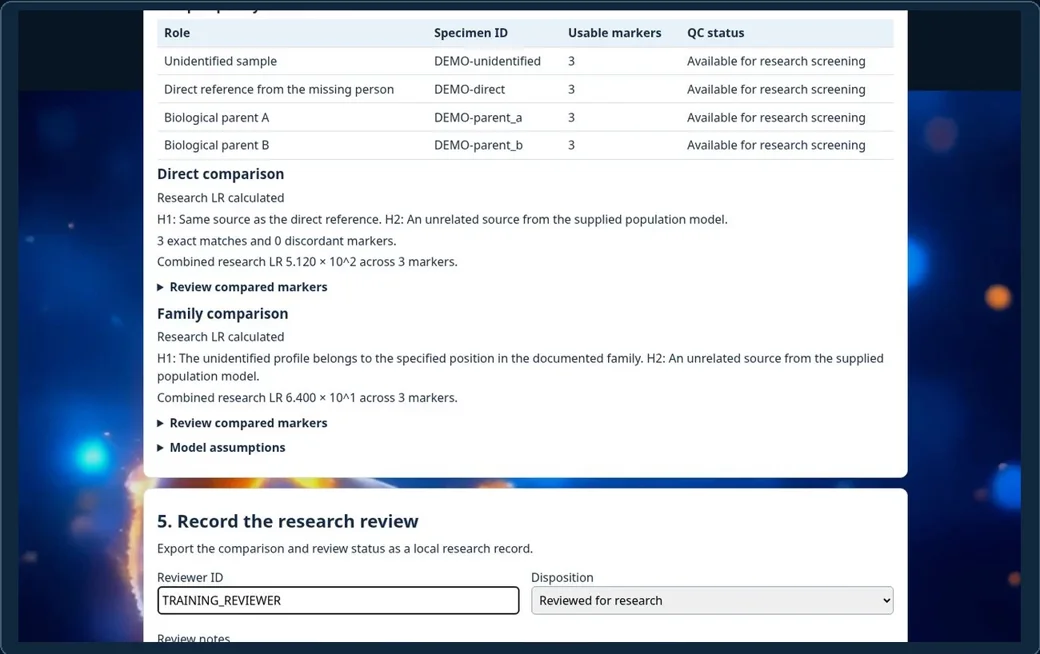
Organize an unidentified profile, direct reference material and documented biological relatives in one research case workflow.
REVIEW WITH CONTEXT
A low-level signal, an unresolved call or a missing frequency should lead to a clear next step.
Probabilix’s training shows the source evidence, the reviewer’s decision and the resulting research status together. You can see why a supported review clears a flag—and why another result remains on hold.
Follow a parentage reviewMEET PROBABILIX
Begin with the short introduction, or choose the complete narrated walkthrough with installation, the full homepage and selected module examples.
A short introduction to Probabilix, its purpose and its connected workflows. English captions are included in the picture.
LET’S TALK SCIENCE
Explore the workflow, its assumptions and the evidence relevant to your intended use.