
APPLICATIONS
Different questions.
A disciplined approach.
Start with the biological question, then follow the evidence, assumptions and review path that belong to it.
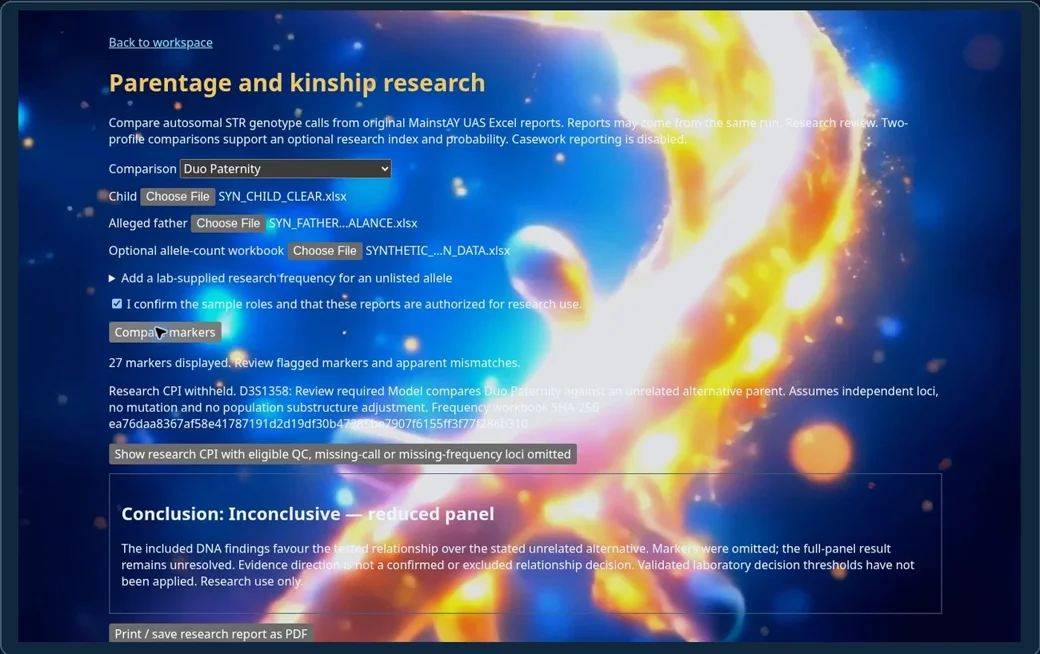 WORKFLOW 01
Parentage
Compare child and parent profiles, examine each STR marker and review the evidence behind a research relationship index.
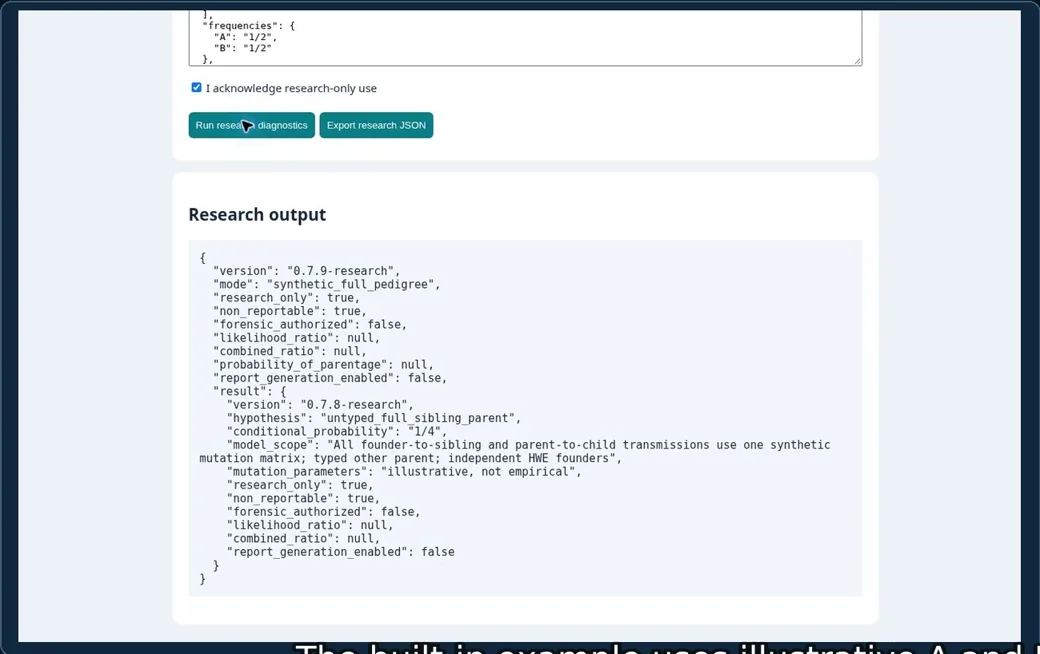 WORKFLOW 02
Kinship
Explore sibling, avuncular and grandparent relationships using stated hypotheses, appropriate population data and a traceable review.
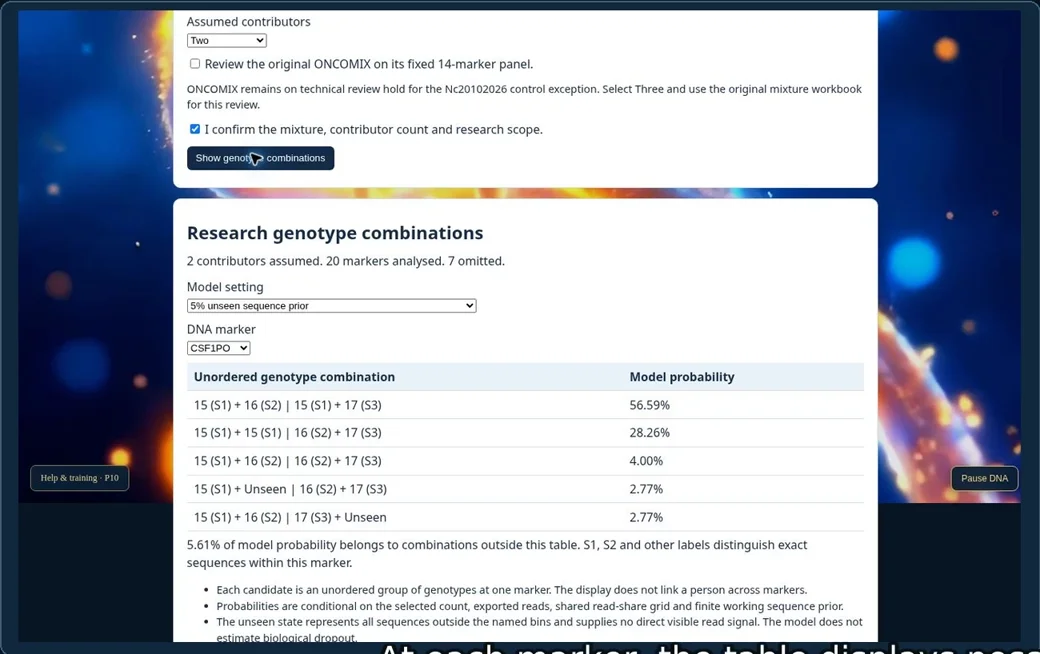 WORKFLOW 03
Mixture research
Move from contributor screening to possible genotype groups, known-reference trials and exploratory likelihood-ratio comparisons.
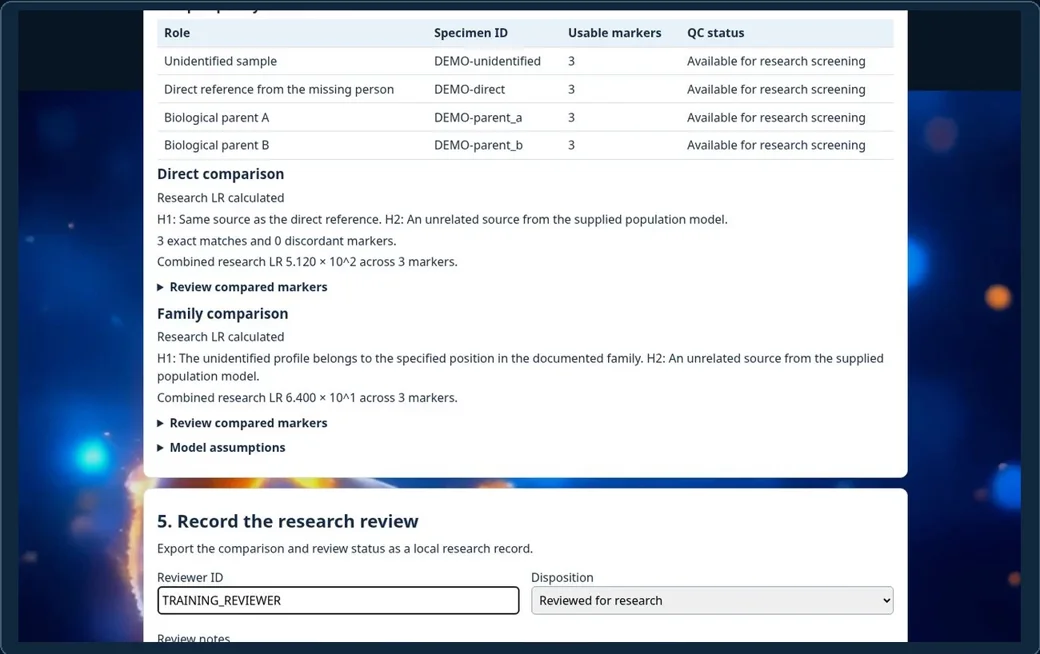 WORKFLOW 04
Missing-person research
Organize an unidentified profile, direct reference material and documented biological relatives in one research case workflow.
BEFORE YOU COMPARE
Agree what the result means.
Correct sample roles, documented reference relationships and suitable population data are part of the analysis. A numeric research output and a laboratory’s authorized conclusion are separate stages.
Training examples use synthetic data and research models. Interpretations and reporting authorization depend on the release, validation scope and laboratory procedures.
LET’S TALK SCIENCE
Bring your laboratory’s questions.
Explore the workflow, its assumptions and the evidence relevant to your intended use.